Which Engine Horsepower Is Better for Used HOWO Tractor Truck Container Haulage: 371HP, 380HP, or 400HP?
For used HOWO tractor truck container haulage, 371HP is the practical choice for regular port-to-warehouse deliveries, while 400HP provides greater power reserve for sustained climbs with heavy containers. A 380HP tractor is a middle option, not an automatic upgrade. Compare actual torque, axle gearing, operating weight, and engine condition before paying more.
1. How Do HOWO 371HP, 380HP, and 400HP Engines Compare in Torque and Pulling Power?
A horsepower rating identifies maximum engine power, not the wheel torque available when a loaded tractor starts moving. A published SINOTRUK HOWO specification lists the WD615.47 at 371HP and 1,470 Nm between 1,300 and 1,600 rpm. This is an engine specification from a 4x2 tractor sheet, not proof that every used 6x4 has the same configuration.
The 380HP category offers only nine more rated horsepower than 371HP, roughly a 2.4% increase. The move from 371HP to 400HP is about 7.8%. Neither percentage establishes climbing ability without engine torque curves and gear ratios. The engine plate, injection-system type, and replacement history must match the seller's description.
| Advertised Rating |
What It Establishes |
Essential Verification |
| 371HP |
Typical WD615.47 example: 1,470 Nm |
Engine code and actual torque specification |
| 380HP |
Small rated-power increase over 371HP |
Exact engine variant and torque curve |
| 400HP |
Higher potential power reserve |
Actual engine identity, cooling and gearing |
See used HOWO tractor trucks for available tractor configurations. Technical reference: SINOTRUK HOWO tractor specifications.
2. Is 371HP Enough for Hauling Fully Loaded 20ft and 40ft Containers?
A sound 371HP tractor can haul legally loaded 20ft and 40ft containers on suitable roads; container length does not determine horsepower demand. Maersk lists maximum cargo payloads of 28,300 kg for a standard 20ft steel container and 28,870 kg for a standard 40ft steel container. Those are equipment payload limits, not permission to exceed local highway weights.
For purchasing, calculate the gross combination weight: tractor, trailer, container tare, cargo, fuel, and other loads. Then check permitted axle loads, fifth-wheel capacity, trailer ratings, and the steepest regular gradient. A heavily packed 20ft container can demand more pulling effort than a lightly loaded 40ft box. Compare the refurbished HOWO heavy-duty truck range by actual configuration.
Container reference: Maersk cargo weight limits.
3. Which Engine Performs Best on Flat Highways, Steep Hills, and Rough Roads?
For flat, paved container corridors, a properly geared 371HP engine is usually enough; repeated loaded climbs give 400HP its clearest advantage. At the same speed, steep grades require more sustained power than level roads. A truck that climbs slowly in a lower gear may complete the route reliably without needing the highest horsepower offered.
On a route combining a congested terminal, a 6% climb, and broken warehouse access roads, the limiting factors change repeatedly. A higher-powered engine helps preserve climbing speed, but 6x4 traction, tire grip, cooling performance, and safe downhill braking remain critical. Specify the route and load before selecting horsepower; do not equate rough roads with an automatic need for 400HP.
4. How Do Gearbox Ratios and Rear Axle Gearing Affect Container Haulage Performance?
A suitable gearbox and final-drive ratio can matter more to low-speed pulling than the nine-horsepower difference between 371HP and 380HP. Used HOWO tractors may have an HW19710 ten-speed gearbox, but buyers must verify the fitted transmission and actual axle-ratio stamping. Two visually identical tractors can respond very differently on a loaded ramp.
For illustration, a 5.73 final-drive ratio provides about 19% more torque multiplication than 4.80 at the same engine torque and selected gear, before drivetrain losses. It also produces higher engine rpm at the same road speed. The trade-off is stronger low-speed pulling versus potentially noisier, less economical cruising. Confirm tire diameter and transmission top gear before choosing either ratio.
5. Which Engine Horsepower Offers the Best Fuel Economy for Container Transportation?
The lowest fuel bill comes from an efficient engine-and-drivetrain match, not necessarily the lowest horsepower rating. A 371HP truck operating near its efficient torque range can outperform a poorly geared 400HP unit on flat highways. Conversely, a heavily loaded lower-powered truck may spend more time at high throttle on a mountainous route.
Measure fuel economy in liters per 100 km using similar cargo weights, routes, and cruising speeds. A difference of just 1 L/100 km across 60,000 km annually equals 600 liters. At an illustrative diesel cost of USD 1.20 per liter, that is USD 720 per year. Idle hours and loaded return trips should be included in fleet comparisons.
6. How Do Engine Reliability, Maintenance Costs, and Spare Parts Availability Compare?
Documented mechanical condition is a stronger predictor of used-truck purchasing risk than whether the badge says 371HP, 380HP, or 400HP. Many workshops know the WD615 engine family, but parts compatibility depends on the exact engine version, injection arrangement, and refurbishment history. A replacement engine can change the spares list without changing the truck's exterior appearance.
Request the engine number, repair invoice or refurbishment sheet, and parts list for injectors, turbocharger, filters, belts, and cooling components. Check for coolant contamination, oil leaks, poor hot-start behavior, and abnormal turbocharger noise. A cheaper tractor with an undocumented engine replacement can lose its price advantage after one major repair or several weeks off the road.
7. What Should Buyers Inspect Before Purchasing a Used HOWO 371HP, 380HP, or 400HP Tractor Truck?
A used HOWO tractor should pass engine, drivetrain, braking, and fifth-wheel checks before its horsepower rating influences the purchase decision. Start with a genuine cold start, then record warm idle, dashboard warnings, exhaust smoke, coolant temperature, and oil pressure against the engine-specific manual. Look beneath the chassis for oil leakage and evidence of welded repairs.
The acceptance test should include forward and reverse movement, gear engagement, clutch response, brake operation, and air-pressure recovery. Ask for dated photos tied to the chassis number and proof of any remanufactured engine components. A yard test cannot establish performance at full combination weight; request a loaded test where feasible. The HOWO tractor specification inspection guide covers other vehicle checks.
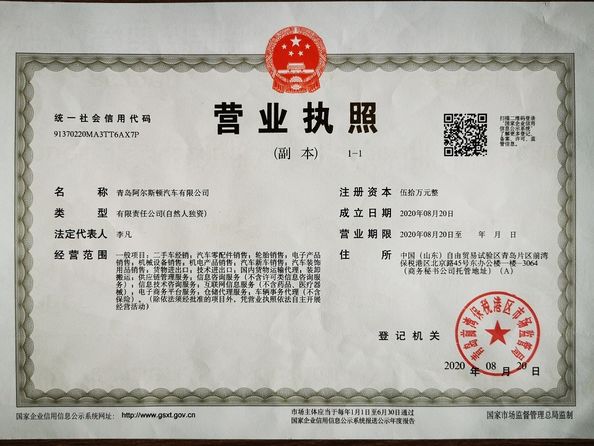
For Qingdao Alston Motors, refurbishment evidence should connect mechanical inspection records to the actual vehicle rather than simply describe repainting.
Related YouTube Video: Remanufactured 371HP HOWO Engine Preparation
The workshop footage illustrates engine preparation, not a certified loaded-road performance test.
8. Is the Higher Purchase Price of a 380HP or 400HP HOWO Tractor Worth the Investment?
A higher-priced engine is worth the premium only when its usable performance reduces delivery costs or protects the schedule on demanding routes. Compare trucks with the same refurbishment scope, tire quality, clutch condition, transmission, and trailer compatibility. Otherwise, a quoted horsepower premium can hide major differences in vehicle condition rather than genuine productive value.
For container operators, Qingdao Alston Motors recommends treating 371HP as the baseline for regular paved-road deliveries and considering 400HP when sustained loaded gradients justify additional power reserve. A 380HP unit should earn its price through verified torque, condition, and gearing—not nine extra horsepower on a quotation. Review the company's HOWO refurbishment and export experience when comparing preparation standards.
9. Which HOWO Engine Is Best for Port Container Delivery, Long-Distance Haulage, and Heavy Loads?
Choose 371HP for ordinary port distribution, 380HP when a well-specified unit offers good value, and 400HP for repeated heavy-load climbing. Highway distance alone does not justify extra horsepower: a flat 600 km route can be less demanding than a short, steep haul. Buy the complete tractor configuration, not the engine rating.
| Operating Pattern |
Recommended Starting Point |
Deciding Check |
| Port-to-warehouse, paved roads |
371HP |
Condition, clutch, cooling |
| Mixed regional transport |
371HP or 380HP |
Torque curve and axle ratio |
| Repeated heavy climbing |
400HP |
Loaded grade performance |
| Flat long-distance highways |
371HP or 380HP |
Cruise rpm and fuel records |
For a model-specific quotation, contact the HOWO tractor truck export team with container weights, route profile, trailer type, steering requirement, and expected annual kilometers.
Frequently Asked Questions
1. Is 371HP enough for a 40ft container?
Yes, when gross combination weight, grade, trailer capacity, and local limits are suitable.
2. Is 380HP noticeably better than 371HP?
Not automatically. Its nine-horsepower increase is small; torque and gearing matter more.
3. Does 400HP always use more diesel?
No. Compare consumption over equivalent loaded routes before deciding.
4. Which engine is best for steep roads?
Choose a sound 400HP configuration with suitable gearing, cooling, and braking for repeated heavy climbs.
5. Can a remanufactured 371HP engine be reliable?
Yes, with documented parts, proper assembly, and convincing operating tests.
6. Which axle ratio is better for containers?
Higher numerical ratios favor low-speed pulling; lower ratios generally favor highway cruising.
7. What proof should a used-truck seller provide?
Engine identification, refurbishment records, cold-start footage, shifting and braking tests, and trailer compatibility.
Written by: Bruce Li, Export Consultant
Reviewed by: Alston Motors Export & Technical Team
Company: Qingdao Alston Motors Co., Ltd

 Votre message doit contenir entre 20 et 3 000 caractères!
 French