What Capacity Fuel Tanker Semi Trailer Is Best for Gas Station Supply?
A 40,000L multi-compartment fuel tanker semi trailer is a practical starting specification for supplying several gas stations on one route, provided the tractor-trailer combination can carry the load legally. For smaller station orders or restricted roads, choose 30,000–35,000L. The right capacity follows delivered liters, compartment needs, and permitted payload—not tank volume alone.
1. What Fuel Tanker Capacity Is Best for Small, Medium, and High-Volume Gas Stations?
A 30,000–40,000L tanker suits many multi-station delivery routes, while 45,000–50,000L makes sense only where demand and permitted vehicle weight justify it. A small urban station accepting 8,000L per delivery may not need a large articulated tanker at all. A busy highway station ordering 25,000L can make better use of a larger delivery vehicle.
Match the trailer to the complete route, not the biggest station on it. Confirm each delivery quantity, depot distance, road restrictions, and receiving-tank access before comparing fuel tanker semi trailers. A high-volume trailer that cannot enter one delivery point creates costly transfers or a second trip.
2. How Do You Calculate the Right Fuel Tanker Capacity Based on Daily Sales and Storage Tank Size?
Calculate the required drop from fuel sales between deliveries, then limit it to the free space in each receiving tank. A station selling 9,000L per day needs approximately 27,000L over three days. But if its underground tanks have only 18,000L of usable free capacity at arrival, the planned delivery cannot exceed that receiving limit.
Calculate gasoline and diesel separately. For a route supplying three stations with orders of 12,000L, 10,000L, and 8,000L, total demand reaches 30,000L; the compartment layout must also match each order. Allow for product-specific loading limits, residual fuel, and temperature-related expansion rather than treating the trailer's nominal volume as guaranteed deliverable fuel.
3. 30,000L vs 40,000L vs 45,000L vs 50,000L: Which Fuel Tanker Capacity Should You Choose?
A 40,000L tanker offers useful volume for multi-stop supply, but a smaller tank can deliver more fuel legally on weight-restricted routes. The table compares nominal volume with the liquid weight of diesel at an illustrative density of 0.84 kg/L. These figures are not authorized filling quantities, and they exclude tractor and trailer weight.
| Nominal Capacity |
Diesel Weight at Stated Volume |
Capacity Decision |
| 30,000L |
25.2 tonnes |
Restricted routes and smaller drop sizes |
| 40,000L |
33.6 tonnes |
Multi-station routes if permitted weight allows |
| 45,000L |
37.8 tonnes |
High-volume runs with verified payload |
| 50,000L |
42.0 tonnes |
Specialized high-capacity routes |
Ask for the approved tank drawing, measured empty weight, individual compartment sizes, and vehicle ratings before deciding. A quoted 45,000L tank is not automatically a 45,000L legal diesel load. The purchase specification should state the required delivered volume by fuel type, not merely the largest available shell.
4. How Many Compartments Are Needed to Transport Gasoline and Diesel in One Trip?
Three to five separate compartments provide flexibility for delivering diesel and multiple gasoline grades without mixing products. A proposed 40,000L arrangement might allocate 12,000L, 10,000L, 10,000L, and 8,000L across four chambers. Those figures describe compartment capacity, not permission to fill every chamber to its nominal maximum under all conditions.
Require a compartment drawing that identifies each manhole, outlet, emergency bottom valve, and product connection. Confirm whether discharge lines are dedicated or share a manifold, and how cross-contamination is prevented. Check partial-load rules and liquid-surge control too: splitting a tank into compartments does not make every loading combination safe or legal.
5. How Do Fuel Density, Axle Loads, and Road Weight Limits Affect Usable Tanker Capacity?
Legal gross combination mass and axle distribution determine usable fuel capacity before the tank's advertised liters do. Diesel at 0.84 kg/L weighs 33.6 tonnes in a 40,000L load; gasoline at an illustrative 0.74 kg/L weighs 29.6 tonnes. Real product densities vary, so use loading documents and the applicable temperature reference for final calculations.
Consider an illustrative 45-tonne combination limit with an 8-tonne tractor and 10-tonne empty trailer. Only 27 tonnes remain for cargo and other allowances—roughly 32,100L of diesel before those allowances. Actual axle-group, kingpin, bridge, and permit limits may reduce it further. Verify the chosen tractor alongside the trailer; a nominal tank-volume comparison alone cannot establish road legality.
6. Can a Large Fuel Tanker Safely Access and Unload at Small or Crowded Gas Stations?
A larger tanker should be rejected for a route if its swept path, unloading position, or exit maneuver is unsafe. Check the station's gate width, turning space, forecourt slope, canopy clearance, surface loading, and proximity to customers. A 45,000L trailer that requires reversing across live fuel-pump lanes is not an operational improvement over a smaller vehicle.
Unloading arrangements also need an exact match. Confirm hose length, coupling types, gravity-discharge height, vapor-recovery requirements where applicable, and safe access to each underground fill point. This YouTube video of a fuel tanker unloading diesel at a gas station illustrates station positioning and delivery workflow; it is not proof that a proposed trailer meets local specifications.
7. Steel vs Aluminum Fuel Tankers: Which Material and Axle Configuration Is Better for Gas Station Supply?
Aluminum is worth considering when lower trailer tare weight increases legal fuel payload; carbon steel is attractive when purchase cost and local repair capability take priority. Compare the actual weight of two approved designs, not generic material claims. Tank shell thickness, corrosion protection, weld quality, and compatibility with the intended petroleum products must be documented.
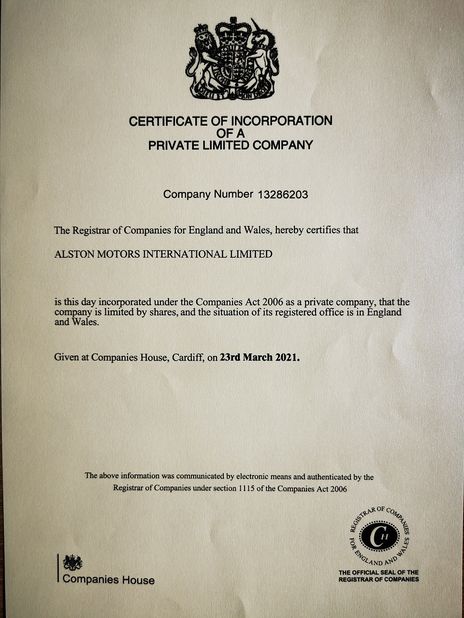
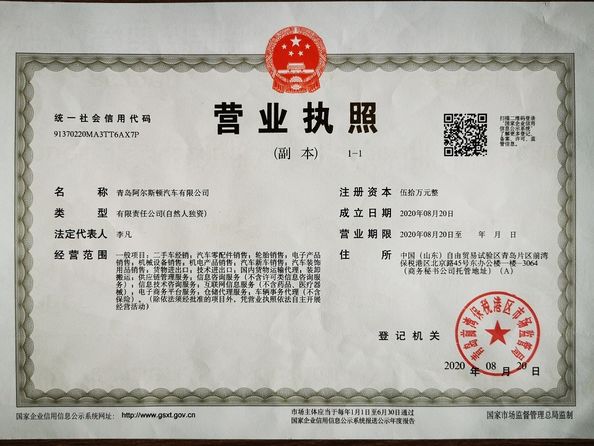
A three-axle layout is common for large fuel tank semi trailers, but it cannot guarantee a particular allowable load. Review axle spacing, suspension, brakes, tire ratings, and kingpin load with the tractor specification. Buyers comparing complete transport equipment can also review Qingdao Alston Motors' commercial vehicle export profile before requesting an approved model-specific drawing.
8. How Does Fuel Tanker Capacity Affect Delivery Frequency and Transportation Cost per Liter?
A larger tanker lowers delivery cost per liter only when its additional legal capacity is regularly utilized. At an illustrative trip cost of $450 for 25,000L delivered, transportation costs $0.018/L. A $540 trip delivering 35,000L costs about $0.0154/L. These examples compare operating economics; they are not freight offers or predicted savings.
If the larger vehicle carries only 25,000L, its cost rises to $0.0216/L under the same assumptions. Include empty return mileage, depot waiting, discharge time, tire and brake maintenance, road tolls, and financing costs in the calculation. Delivery scheduling and compartment utilization often save more money than buying another 5,000L of nominal tank volume.
9. What Safety Systems, Legal Requirements, and Inspection Documents Must Buyers Verify Before Purchase?
A fuel tanker semi trailer should not be ordered until its tank approvals, safety equipment, and operating documents match the fuel and destination. The UNECE ADR 2025 provisions cover tank construction, testing, loading, and transport where ADR applies; they are a technical reference elsewhere, not automatic approval for every export market.
| Buyer Check |
Required Evidence |
| Tank construction |
Approved drawings, material specifications, inspection records |
| Product separation |
Compartment plan, valve identification, line arrangement |
| Safety systems |
Emergency shut-off, bonding, overfill and vapor controls as required |
| Roadworthiness |
Tare weight, axle/brake ratings, applicable approvals |
For gas station supply, Qingdao Alston Motors recommends selecting 30,000–40,000L multi-compartment equipment only after verifying permitted payload, station access, and fuel-grade demand. The related fuel tanker safety and inspection guide covers physical checks. Buyers can request a route-matched trailer specification using their fuel grades, target drops, tractor model, and destination requirements.
Frequently Asked Questions
Is a 40,000L Fuel Tanker Suitable for Every Gas Station?
No. Its usable load and station access must match the route, and smaller sites may need smaller vehicles.
Can a 45,000L Tanker Legally Carry 45,000L of Diesel?
Only if its approved filling conditions, combination mass, axle loads, and local rules all permit it.
How Many Compartments Are Best for Multi-Grade Delivery?
Three to five are a useful starting design; final sizes must match individual fuel-grade orders.
Is Steel or Aluminum Better for a Fuel Tank Semi Trailer?
Choose by approved tare weight, purchase cost, corrosion protection, and local repair capability.
Does a Gas Station Delivery Tanker Need a Pump?
Not always. Gravity unloading may suit underground tanks; powered transfer requires an approved compatible system.
Does a 50,000L Tank Always Reduce Transport Cost?
No. Unused volume, road restrictions, and higher trip costs can make a smaller tanker cheaper per delivered liter.
Which Documents Should I Request Before Payment?
Request approved tank drawings, equipment specifications, test records, weight data, and applicable road-transport approvals.
Written by: Bruce Li, Export Consultant
Reviewed by: Alston Motors Export & Technical Team
Company: Qingdao Alston Motors Co., Ltd

 Votre message doit contenir entre 20 et 3 000 caractères!
 French