Comment éviter d'acheter un camion tracteur HOWO usagé pour la logistique transfrontalière?
Pour éviter d'acheter un camion tracteur HOWO usagé pour une logistique transfrontalière, les acheteurs doivent vérifier la compatibilité du moteur avec le carburant, la réponse de la boîte de vitesses, l'état de la cinquième roue, la configuration de l'essieu, le système d'air des freins,portée du réservoir de carburant, le câblage de la cabine, le timbre du VIN et les documents d'exportation avant le paiement.
1Vérifiez d' abord la compatibilité du carburant et le type de moteur.
Un moteur HOWO mécanique Euro II est souvent plus pratique pour la logistique transfrontalière qu'un moteur électronique complexe.
Beaucoup de camions tracteurs HOWO utilisés sont équipés de moteurs mécaniques WD615, en particulier les versions 371HP et 375HP.Ces moteurs sont largement utilisés sur les marchés en développement parce qu'ils tolèrent mieux la qualité variable du diesel que de nombreux systèmes de common-railPour les routes longue distance à travers l'Afrique, l'Asie centrale et le Moyen-Orient, la qualité du carburant peut varier considérablement entre les pays et les stations routières.
Les acheteurs devraient vérifier la plaque du moteur, la pompe d'injection, le séparateur eau-carburant, la fumée d'échappement, la stabilité au ralenti et les fuites d'huile.ou une épaisse fumée noire peut indiquer l'usure de l'injecteurUn mauvais système de carburant peut rapidement transformer un tracteur bon marché en un projet de réparation coûteux.
2Test de la boîte de vitesses et du système de retardation HW19712
Un chariot tracteur transfrontalier doit se déplacer en douceur et contrôler la vitesse en descente en toute sécurité sous une lourde charge de remorque.
Beaucoup de camions tracteurs HOWO longue distance utilisent la boîte de vitesses manuelle HW19712 à 12 vitesses.engagement retardé, les sauts de vitesse ou les vibrations anormales peuvent indiquer des synchronisateurs usés, des défauts de séparateur pneumatique ou une usure interne de la boîte de vitesses.
Pour les routes de montagne ou le transport de semi-remorques lourdes, le frein hydraulique ou le frein d'échappement doivent également être testés.les conducteurs comptent trop sur les freins de serviceLes fuites d'huile du joint arrière de la boîte de vitesses doivent également être vérifiées avant expédition.
3Inspectez la cinquième roue, les rails du châssis et la connexion de remorquage.
La cinquième roue et la zone de montage du châssis sont des pièces critiques pour la sécurité sur tout tracteur HOWO utilisé.
Une cinquième roue usée peut entraîner un mouvement dangereux de la remorque, un mauvais couplage ou même la séparation de la remorque sous une charge lourde.Les acheteurs devraient vérifier si le camion utilise une 50 # ou 90 # cinquième roue et si elle correspond à la taille de la remorque kingpinLes mâchoires de verrouillage, les boulons de montage, l'état de la graisse et l'usure de la plaque de la quatrième roue doivent être inspectés.
Les rails du châssis autour de la cinquième roue doivent être soigneusement vérifiés. Les camions transfrontaliers tirent souvent des combinaisons de semi-remorques de 40 à 60 tonnes sur de longues distances, des routes accidentées et des couloirs frontaliers.Les fissures de la ligne de cheveux, de mauvaises réparations de soudure, de torsion du cadre ou de peinture fraîche autour de la plaque de montage peuvent masquer les dommages antérieurs de surcharge.
Les acheteurs qui comparent les têtes de tracteur prêtes à l'exportation peuvent examinerunités de tracteurs HOWO rénovées destinées à l'exportationavant de choisir la puissance, la taille de la cinquième roue, la configuration de l'essieu et la correspondance de la remorque.
4. Choisissez la bonne configuration de l' essieu pour le trajet
La configuration correcte de l'essieu arrière dépend du fait que le camion roule principalement sur des autoroutes, des routes accidentées, des routes minières ou des routes frontalières mixtes.
Les essieux à réducteur unique ST16 sont plus adaptés à la logistique de longue distance pavée car ils sont plus légers et généralement plus économes en carburant.zones frontalières boueuses, la construction de routes d'accès, et des conditions de traction plus lourdes.
Les acheteurs doivent vérifier les boîtiers d'essieu, les joints de moyeu, la fonction de verrouillage du différentiel, les fuites d'huile et les marques de réparation antérieures.L'huile autour des extrémités du moyeu ou des boîtiers d'essieu peut indiquer des joints usés, une mauvaise maintenance ou des dommages à l'engrenage interne.
Les acheteurs qui comparent des types de véhicules apparentés peuvent également examinerOptions de camions HOWO provenant de Chineavant de choisir des camions tracteurs, camions déchargeurs, camions cargo ou camions-citernes pour les travaux transfrontaliers.
| Type d'essieu |
La structure |
Mieux vaut pour |
Rappel à l'acheteur |
| Pour l'essieu ST16 |
Réduction unique |
Autoroutes pavées, itinéraires plus légers sur de longues distances |
Une meilleure économie de carburant sur des routes plus lisses |
| HC16, essieu |
Réduction du centre |
Routes accidentées, routes minières, terrain doux |
Plus de force de traction mais plus lourd |
| Layout 6x4 |
Deux essieux à traction arrière |
La plupart des services logistiques transfrontaliers |
Traction et coût équilibrés |
| Layout 8x4 |
Support supplémentaire de l'essieu avant |
Utilisation spéciale pour travaux lourds |
Vérifiez d'abord les règles locales de charge sur les essieux |
5Vérifiez les réservoirs de carburant et la portée du carburant.
La capacité des réservoirs de carburant est importante car les routes transfrontalières impliquent souvent de longues distances, des écarts de prix du carburant et une qualité incertaine des stations.
Un camion-tracteur HOWO pratique utilisé pour la logistique internationale peut utiliser un réservoir principal de 600 L avec un réservoir auxiliaire de 400 L, ce qui donne jusqu'à environ 1 000 L de capacité totale de carburant.Cela permet aux opérateurs de faire le plein dans les régions à moindre coût et de réduire le risque de s'arrêter dans des stations routières peu fiables.
Les acheteurs doivent inspecter les réservoirs de carburant en aluminium pour détecter les bosses, les fissures, les dommages causés par un choc au fond, les supports lâches et les problèmes de déflecteur interne.Si la conduite de carburant prend de l'air pendant le changement de réservoir, le moteur peut perdre de la puissance ou s'arrêter sur la route.
Pour les flottes longues distances, la capacité de carburant doit correspondre à la distance de route, à la charge utile, au terrain, aux habitudes du conducteur et au type de remorque.ou la remorque-citerne de carburant n'aura pas la même consommation de carburant qu'une tête de tracteur vide.
6. Testez le système de freinage pneumatique et la suspension
Un système de freinage à air faible est l'un des plus grands risques lors de l'achat d'un camion tracteur d'occasion pour la logistique transfrontalière.
Le compresseur d'air doit accumuler une pression d'environ 0,8 MPa dans un délai raisonnable.les vannesUne chute rapide de pression peut indiquer des fuites d'étanchéité, des tuyaux fissurés ou des soupapes usées.
L'humidité et l'huile à l'intérieur du système d'aération peuvent endommager les vannes relais et le contrôle des freins de remorque.Les ressorts à feuilles en suspension doivent également être inspectés pour détecter les fissures des feuilles, des boulons manquants, des boîtiers usés et un mauvais alignement des essieux.
Pour une norme de qualité plus large, les acheteurs peuvent examiner lesflux de travail de vérification des camions avant expéditionavant de confirmer un camion tracteur pour une opération d'exportation longue distance.
7Vérifiez la cabine, le câblage et le confort du conducteur.
Le confort du conducteur n'est pas seulement cosmétique; il affecte la sécurité et la fiabilité sur les routes transfrontalières de plusieurs jours.
Une cabine dormante à toit haut HOWO HW79 est pratique pour les transports internationaux, car les conducteurs peuvent passer plusieurs jours dans les zones douanières, les files d'attente aux frontières, les ports ou les postes de contrôle éloignés.état du dormeur, le réglage du siège, les interrupteurs du tableau de bord et l'étanchéité de la cabine doivent tous être vérifiés.
Les problèmes électriques sont fréquents dans les camions mal rénovés. Les acheteurs doivent inspecter le câblage de 24V, les câbles de la batterie, le boîtier de fusibles, le système d'éclairage, les lampes d'avertissement du tableau de bord,et tout câblage du marché de rechangeL'épissage amateur de fils peut provoquer des courts-circuits, des défauts de capteurs ou même un risque d'incendie lors d'un fonctionnement à longue distance.
Un camion dont la cabine a été repeinte mais dont l'électronique est instable peut encore poser problème après l'exportation.
8Vérifiez le timbre VIN, la qualité de la rénovation et les documents d'exportation.
Le timbre VIN et les documents d'exportation doivent correspondre exactement avant que le camion ne quitte la Chine.
Le VIN d'origine du châssis est généralement estampillé sur le rail du cadre du côté droit. Les acheteurs doivent vérifier si le VIN est clair, original et exempt de marques de meulage, de cicatrices de soudage ou de signes de re-stampage.Les agents des frontières et des douanes peuvent comparer le numéro du châssis avec la facture commerciale, les documents d'exportation, le connaissement et les registres d'inspection.
Les acheteurs devraient demander des vidéos de test du moteur, des vidéos de changement de boîte de vitesses, des photos de la cinquième roue, des photos du châssis, des vidéos de test des freins, des photos des pneus, des photos du réservoir de carburant,photos de cabine, et télécharger des photos avant de payer le solde.
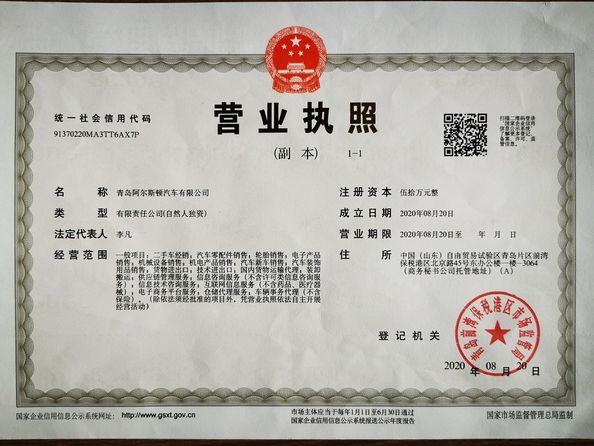
Qingdao Alston Motors fournit des camions tracteurs HOWO réaménagés avec moteurs vérifiés, boîtes de vitesses testées, roues de rechange vérifiées, systèmes d'aération vérifiés, documents d'exportation, photos de chargement,et soutien avant expédition pour les acheteurs étrangers.
Les acheteurs qui veulent comprendre les antécédents des fournisseurs peuvent examinerCapacité d'exportation d'Alston Motors et antécédents de l'entrepriseavant de confirmer la commande.
| Zone d'inspection |
Ce qu'il faut vérifier |
Risque pour l'acheteur |
| Le cachet VIN |
Code de châssis original à 17 chiffres |
Retard ou saisie en douane |
| Moteur |
La fumée, la pression de l'huile, la pompe à carburant, le coup de feu. |
Coût élevé des réparations |
| Boîte de vitesses |
Lecture de l'échangeur, du séparateur, du joint arrière |
Échec à longue distance |
| La cinquième roue |
Étanchéité de la mâchoire, correspondance 50/90 |
Risque de couplage de remorque |
| Système d'aération |
Accumulation de pression, fuites, écoulement d'eau |
Échec du freinage |
| Documents |
Numéro de la facture, BL, numéro du châssis, numéro du moteur |
Problèmes de dégagement |
9Recommandation finale d' achat
Un bon camion-tracteur HOWO d'occasion pour la logistique transfrontalière devrait être sélectionné en fonction de son état, de l'adéquation de son itinéraire et de l'exactitude de ses documents, et non seulement en fonction de son prix.
Pour les routes pavées sur de longues distances, un tracteur HOWO 6x4 avec des essieux ST16, un moteur de 371 ch et une cinquième roue correcte peuvent suffire.ou exploitation sur route douce, les essieux HC16 et une suspension plus solide peuvent être plus appropriés.
Les acheteurs doivent éviter les camions dont le numéro de série de la voiture est flou, les gros sauts, les sauts de boîtes de vitesses, les roues en défaillance, les fuites d'air, les mauvais câbles, les re-peintures suspectes ou les documents d'exportation manquants.Ces problèmes coûtent généralement plus cher une fois le camion arrivé au pays de destination.
Pour confirmer les têtes de tracteur disponibles, la puissance du moteur, la taille de la quatrième roue, la configuration de l'essieu, les photos d'inspection, les détails du chargement et le coût de transport, les acheteurs peuventDemandez à Alston Motors les spécifications du tracteur.avant l'achat.
Questions fréquemment posées
Pourquoi un moteur Euro II WD615 convient-il à la logistique transfrontalière?
Un moteur mécanique Euro II WD615 est approprié car il est plus simple, plus facile à réparer et plus tolérant à la qualité variable du diesel que de nombreux moteurs électroniques à rail commun.Ceci est utile sur de longues routes où la qualité du carburant n'est pas toujours constante.
Qu'est-ce que je dois vérifier sur la cinquième roue avant d'acheter un camion tracteur HOWO d'occasion?
Vérifiez si la cinquième roue est de 50# ou 90#, inspectez les mâchoires de verrouillage, les boulons de montage, l'usure de la plaque, l'état de la graisse et la zone de montage du châssis.
Est-ce que le HC16 ou le ST16 est préférable pour le transport transfrontalier?
Les essieux ST16 sont meilleurs pour la logistique des autoroutes pavées et l'efficacité énergétique.
Comment savoir si la boîte de vitesses est usée?
Lors d'un essai routier, vérifiez la présence de meulage, de changement de vitesse retardé, de saut de vitesse, de bruit anormal et de mauvaise commutation à haute et basse autonomie.
Les réservoirs à double carburant sont-ils nécessaires pour la logistique longue distance?
Les réservoirs à double carburant sont utiles pour les itinéraires longue distance et multi-pays car ils élargissent la portée de conduite et permettent aux conducteurs de faire le plein dans des régions à moindre coût ou plus fiables.
Quels problèmes de freins à air dois-je éviter?
Évitez les camions où la pression de l'air s'accumule lentement, où la perte de pression est rapide, où les chambres de freinage ont des fuites, où les réservoirs d'air contiennent de l'eau huileuse, où les vannes de relais sont endommagées ou où les connexions d'air de la remorque sont instables.
Pourquoi le timbre VIN est-il important pour l'exportation?
Le timbre VIN doit correspondre à la facture, à la déclaration d'exportation, au connaissement et aux documents douaniers.
Dois-je choisir le camion tracteur HOWO le moins cher?
Un tracteur très bon marché peut cacher l'usure du moteur, des problèmes de boîte de vitesses, des dommages à la cinquième roue, des défauts de frein à air, un mauvais câblage ou des risques pour les documents.L'état vérifié est plus important que le prix le plus bas.
Écrit par:Équipe de rédaction Alston Motors
Révisé par:Exportation et équipe technique
Compagnie:Qingdao Alston Motors Co., Ltd. a été déclarée.
À propos de l'équipe de rédaction d'Alston Motors:
L'équipe de rédaction d'Alston Motors partage des idées pratiques sur les camions HOWO rénovés, les semi-remorques, les véhicules utilitaires, les voitures d'occasion et les solutions d'exportation pour l'Afrique et d'autres marchés en développement.Le contenu est basé sur l'expérience de l'entreprise dans le domaine de l'inspection des véhicules, rénovation, coordination des exportations, support des pièces de rechange et service à la clientèle pour les acheteurs étrangers.

 Votre message doit contenir entre 20 et 3 000 caractères!
 French