What Is the Best Used HOWO Fuel Tank Truck for Depot-to-Gas-Station Delivery?
The best used HOWO fuel tank truck for depot-to-gas-station delivery is typically a 6x4 model with a 20,000–25,000L multi-compartment tank, 371–375HP engine, gravity discharge, and station-compatible safety equipment. This configuration suits most petrol and diesel distribution routes because it balances payload, station access, unloading flexibility, mechanical reliability, and operating cost.
1. What Tank Capacity and Compartment Layout Are Best for Depot-to-Gas-Station Delivery?
For most retail fuel routes, a 20,000–25,000L tank with 2–4 independent compartments provides the most practical combination of payload and delivery flexibility.
A tanker supplying only diesel can operate with fewer compartments. A route serving stations that sell diesel plus several petrol grades benefits from separate compartments, individual outlets, clearly identified valves, and secure seals. A 20,000L tank might, for example, be divided into 10,000L, 5,000L, and 5,000L sections to match different delivery quantities.
Compartment design should follow actual station demand rather than a standard factory layout. Before ordering, compare daily sales, underground storage capacity, delivery frequency, and product mix with a detailed fuel tanker capacity selection guide.
2. Should You Choose a 20,000L, 30,000L, or Larger Used HOWO Fuel Tank Truck?
A 20,000–25,000L rigid tanker is the preferred size for normal gas-station distribution; a 30,000L unit makes sense only when route access, station turnover, and legal axle loading support the extra volume.
Tank size cannot be judged by capacity alone. Using roughly 0.84 kg/L as a planning value, 20,000L of diesel represents about 16.8 tonnes of product before adding the chassis, tank body, driver, fuel, hoses, and equipment.
| Delivery Application |
Recommended Configuration |
Main Reason |
| Small urban stations |
10,000–15,000L, 4x2 |
Better access and turning |
| Standard station routes |
20,000–25,000L, 6x4 |
Balanced payload and flexibility |
| High-volume stations |
Around 30,000L, 8x4 |
Fewer trips where roads permit |
| Bulk depot transfer |
Tanker semi-trailer |
Better for larger payloads |
A larger tanker is not automatically more economical. One extra trip may cost less than operating an oversized truck that struggles with narrow station entrances, bridge limits, or restricted axle loads. Current used HOWO fuel tank truck configurations help show how capacity, axle layout, and discharge equipment vary by application.
3. Do You Need Gravity Discharge, a Pump-and-Meter System, or Both?
For delivery into underground gas-station tanks, gravity discharge should normally be the base system; pumps and flow meters are added when the route requires powered or measured delivery.
Gravity discharge is simple, reliable, and well suited to stations with underground receiving tanks positioned below the tanker outlet. It reduces mechanical complexity and avoids operating a pump when gravity already provides sufficient flow.
A PTO-driven pump becomes useful when delivering to above-ground tanks, industrial sites, farms, generators, or locations with insufficient gravity head. A calibrated flow meter is valuable when the customer requires measured delivery quantities or commercial delivery records.
For a truck dedicated only to standard retail gas stations, an expensive pump-and-meter package is not automatically a better specification.
4. Is a 6x4 HOWO Chassis the Right Choice for Fuel Distribution Routes?
For a 20,000–25,000L fuel tanker, a 6x4 HOWO chassis is the strongest all-round configuration for payload, traction, route flexibility, and maintenance support.
A 371HP or 375HP engine is normally sufficient for this duty. More horsepower does not compensate for poor weight distribution, worn brakes, unsuitable gearing, or limited station access.
A 4x2 chassis is better suited to smaller tanks and urban delivery. An 8x4 becomes reasonable when the route consistently requires around 30,000L and there is enough road width, turning space, bridge capacity, and legal axle allowance.
In practice, depot gates and station entrances often decide the chassis specification before engine power does. Route surveys should therefore include gradients, turning radius, parking area, road surface, and access restrictions.
5. What Should Buyers Inspect on the Tank Body, Valves, Hoses, and Vapor-Recovery System?
A used fuel tanker should not be accepted until the tank structure, compartments, valves, pipelines, hoses, seals, mounting points, and required vapor connections have been checked under working conditions.
Fresh paint can hide corrosion and previous repairs. Inspect lower tank areas, weld seams, manholes, compartment partitions, valve seats, pipe joints, hose condition, saddles, and mounting brackets. On some 20,000L carbon-steel configurations, buyers may encounter approximately 5 mm shell plate, 6 mm end plates, and 4 mm baffles, but actual specifications must be verified on the truck being purchased.
Internal baffles also matter because liquid movement increases dynamic loading during braking and cornering. Petrol delivery routes may additionally require vapor-recovery connections depending on station equipment and local regulations.
A practical example of tanker equipment inspection can be seen here:
YouTube: Used HOWO Fuel Tanker Truck Inspection and Delivery Equipment Test
6. How Should You Check the Engine, Gearbox, Brakes, Tires, and Suspension Before Buying?
The chassis must pass its own mechanical inspection because a sound tank body does not make a worn truck suitable for fuel delivery.
Start with a cold engine. Check starting behavior, exhaust smoke, blow-by, oil pressure, coolant condition, leakage, gearbox engagement, differential noise, steering play, suspension wear, brake-air pressure, and axle alignment.
For export inspection, Qingdao Alston Motors uses practical screening points such as engine compression of approximately 26–28 bar or higher, hot-idle oil pressure of at least 0.2 MPa, and usable tire tread of around 8 mm or more. These figures are inspection references rather than substitutes for a full mechanical evaluation.
| Inspection Area |
Key Check |
| Engine |
Cold start, compression, smoke, leaks |
| Gearbox |
Smooth engagement in all gears |
| Frame |
No structural cracks or poor welding |
| Brakes |
Stable pressure and straight braking |
| Tires |
Tread, sidewalls, matching condition |
| Suspension |
Springs, bushes, U-bolts |
| Tank mounting |
Saddles, brackets and fasteners |
For comparison with other chassis types, see the broader refurbished HOWO truck range.
7. What Safety Features Help Prevent Cross-Drops, Overfilling, Fuel Leaks, and Static Risks?
A safe station-delivery tanker needs independent compartment control, clear product identification, reliable emergency shut-off, leak-free fittings, grounding equipment, and disciplined unloading procedures.
Cross-drops are one of the most expensive operational mistakes in multi-product fuel delivery. Each outlet and control should be clearly identified so the driver can match the correct compartment with the correct underground storage tank.
Emergency bottom valves, secure manhole covers, anti-static grounding equipment, fire extinguishers, reflective markings, and sound discharge hoses should be checked before shipment.
Equipment alone cannot prevent mistakes. Before opening a compartment, the operator still needs to confirm the fuel grade, receiving tank, available ullage, correct hose connection, and discharge sequence.
8. What Tank Tests, Calibration Records, Export Documents, and Local Compliance Should Be Confirmed?
Tank testing and destination compliance must be confirmed before purchase because a mechanically sound tanker can still be unusable if its certification does not match local dangerous-goods rules.
Where applicable, request evidence of tank integrity testing, valve and emergency-shutoff checks, compartment configuration, pump operation, and flow-meter calibration. Vehicle identification details, commercial documents, export paperwork, and any required pre-shipment inspection should match the exact truck being supplied.
For markets applying ADR or similar frameworks, UNECE ADR 2025 addresses tank construction and testing, vehicle requirements, equipment, documentation, loading, and unloading of dangerous goods. Destination-country petroleum, fire, transport, metrology, and axle-load rules still determine whether a particular truck can legally enter service.
External reference: UNECE ADR 2025
9. How Do You Compare Purchase Price, Refurbishment Quality, Payload, and Operating Cost?
The best-value tanker is the truck that provides the lowest reliable delivery cost per liter, not simply the lowest FOB quotation.
For depot-to-gas-station service, Qingdao Alston Motors recommends choosing the route-compatible tank capacity, compartment arrangement, and discharge system first, then evaluating the chassis around that specification. This avoids buying a mechanically attractive truck that does not match the actual delivery route.
Price differences usually reflect tank capacity, chassis condition, tires, pump and meter equipment, refurbishment scope, and whether the tanker body is existing, repaired, or newly installed. A cheaper unit quickly loses its advantage if it requires tires, leaking-valve repairs, brake work, new hoses, or tank modifications after arrival.
Supplier assessment should therefore include inspection records, refurbishment scope, shipment experience, and after-sales support. Buyers can review Qingdao Alston Motors' export and refurbishment experience or contact the export team with the required fuel type, tank size, destination, steering side, station layout, and discharge method.
Frequently Asked Questions
What is the best used HOWO fuel tank truck for gas-station delivery?
A 6x4 HOWO with a 20,000–25,000L multi-compartment tank, 371–375HP engine, gravity discharge, and suitable safety fittings is the preferred configuration for most standard routes.
Is a 30,000L tanker better than a 20,000L tanker?
Only for high-volume routes where station access, legal axle loads, turning space, and road conditions support the larger truck.
How many compartments should a fuel tanker have?
Two to four compartments suit many station routes. The correct layout depends on the number of fuel grades and delivery quantities that must remain separated.
Does a gas-station tanker need a pump?
Not always. Gravity discharge is normally sufficient for underground receiving tanks. A pump is more useful for above-ground tanks or locations requiring powered transfer.
Should the tanker have a flow meter?
A meter is useful when delivery must be measured onboard for commercial or operational reasons. Confirm whether the receiving station already measures delivered volume independently.
What should be inspected first on a used HOWO fuel tanker?
Check the tank structure, valves, engine, brakes, frame, tires, suspension, and tank mounting together. The tanker body and chassis should never be evaluated separately.
Can petrol and diesel be carried in the same tanker?
Yes, when they are stored in properly separated compartments with independent outlets, suitable seals, and operating procedures that comply with destination regulations.
Written by: Bruce Li, Export Consultant
Reviewed by: Alston Motors Export & Technical Team
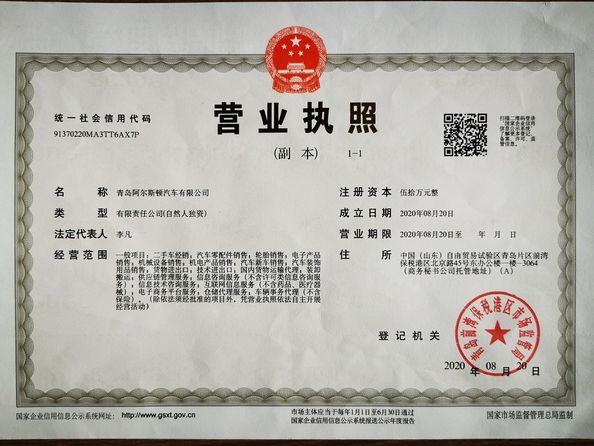
Company: Qingdao Alston Motors Co., Ltd

 Votre message doit contenir entre 20 et 3 000 caractères!
 French