What Is the Best Lowbed Semi Trailer for Transporting Excavators?
The best lowbed semi trailer for transporting excavators is a low-deck, heavy-duty model selected for the machine’s actual weight, track dimensions, and loading method. For construction-site transfers, a verified 3-axle lowbed suits many 20–30-ton excavators; regular 50-ton movements generally call for an engineered 4-axle or multi-axle arrangement.
1. Which Lowbed Semi Trailer Is Best for 20-, 30-, and 50-Ton Excavators?
For most 20–30-ton excavators, begin with a properly rated 3-axle lowbed; for repeated 50-ton moves, begin with a heavier engineered configuration. Bucket attachments and guarding can change transport weight and how the machine bears on the deck.
| Excavator Transport Weight |
Starting Configuration |
Decisive Check |
| About 20 tons |
3-axle lowbed |
Deck fit and loading access |
| About 30 tons |
Heavy-duty 3-axle lowbed |
Certified payload and axle distribution |
| About 50 tons |
Engineered 4-axle or multi-axle lowbed |
Concentrated loads and legal route limits |
A 3-axle unit may carry heavier machinery if its engineering and legal limits permit it. Compare lowbed semi trailers for excavator transport against the exact machine and route, not a brochure's “60-ton” headline.
2. How Do Excavator Weight and Load Distribution Affect Trailer Payload Capacity?
An acceptable payload figure is one supported by structural ratings and a loaded axle-and-kingpin calculation. A 30-ton-class machine might exceed 30,000 kg once attachments, fuel, and protection are included. The counterweight creates a concentrated load; poor positioning can overload the trailer despite acceptable total weight.
Ask for the excavator's transport weight, center-of-gravity information where available, and track-contact dimensions. Then check trailer tare weight, kingpin reaction, axle-group loads, tire ratings, and main-beam capacity. Three axles rated at 13 tons each do not establish 39 tons of legal payload: the trailer has its own weight, and public-road limits may be lower than component ratings.
3. Should You Choose a 3-Axle, 4-Axle, or Multi-Axle Lowbed Trailer?
Choose the fewest axles that satisfy the actual load calculation and local transport rules. A 3-axle unit has fewer tires and brake assemblies to service and may be easier to maneuver. It suits many 20–30-ton excavator movements between construction sites.
For a 50-ton crawler, additional axles may reduce the load carried by each axle, but they also add tare weight, tire scrub, and turning space. An axle count cannot compensate for an under-rated frame or fifth wheel. Request a drawing showing axle spacing and the load at each axle and kingpin, particularly when the route includes weak bridges or narrow bends.
4. What Deck Length, Width, and Loading Height Are Best for Excavator Transport?
The deck must fully support the crawler tracks and leave space to place and restrain the excavator in its approved transport position. Measure track width and ground-contact length, not merely the excavator's overall length. Wide tracks may require approved deck extensions; long tracks need reinforced bearing support.
One 3-axle lowbed trailer specification lists a 9,000 × 3,000 × 1,350 mm working-deck dimension. Confirm the usable platform length and width, and ask the supplier to measure the actual loaded deck height; the third published dimension should not be treated as a verified ground-clearance measurement. Add the excavator's secured transport height to that measured deck height before checking bridges, wires, and permitted route clearances.
5. Which Loading System Is Better: Mechanical Ramps, Hydraulic Ramps, or a Detachable Gooseneck?
Mechanical ramps suit occasional loading; hydraulic ramps save handling effort during frequent site transfers; detachable goosenecks offer a lower front-entry approach for difficult machines. Each has limits. Ramp length, traction, hinge strength, and transition angle must match the crawler's weight and ground clearance, including the load shift as the tracks climb onto the deck.
On a muddy construction site, ramp feet can sink or slide unless the ground and trailer are properly supported. Inspect anti-slip surfaces, retaining pins, hydraulic hoses, and cylinder locks. Ask for the ramp's rated loading capacity and an approved loading procedure. Moving across ramp hinges can impose loads beyond static machine weight.
6. What Frame, Suspension, Axle, and Brake Features Make a Lowbed Trailer Reliable?
A reliable lowbed is built around a documented load path from the crawler tracks to the crossmembers, main beams, suspension, and kingpin. Q345B steel may be suitable, but grade alone proves little. Check beam section sizes, weld continuity, reinforcement around the gooseneck and track-loading zones, and evidence of distortion or repairs.
| Component |
Before-Order Inspection |
Risk If Missed |
| Main beams and welds |
Section dimensions, reinforcement, cracks |
Fatigue or bending |
| Axles and suspension |
Ratings, spacing, spring hangers |
Uneven loading |
| Tires and brakes |
Load index, air lines, chambers, ABS where fitted |
Heat or braking failure |
| Kingpin and landing gear |
Rating, mounting, wear, support |
Coupling or parking failure |
| Ramps and anchors |
Hinge pins, locks, tie-down ratings |
Loading or restraint failure |
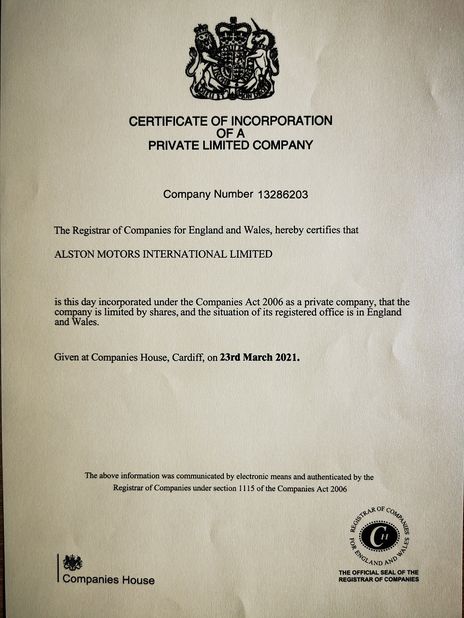
For Qingdao Alston Motors, the useful starting point in an excavator lowbed recommendation is the buyer's machine dimensions and route, followed by a configuration drawing and component checks—not an advertised capacity alone. The company and export-service background explains the wider sourcing and inspection context.
7. How Should Excavators Be Loaded, Positioned, and Secured for Safe Transport?
Safe loading starts with firm, level ground, stable ramp supports, and a clear path for the crawler tracks. Follow manufacturers' loading procedures, travel slowly, and exclude bystanders. Position the excavator to achieve approved axle and kingpin loads, then lower and secure the boom, arm, and bucket as directed.
Under US 49 CFR §393.130, tracked machinery weighing at least 4,536 kg requires at least four tiedowns, placed near the front and rear or at designated attachment points. Restrain attachments separately as required and verify chain and anchor working-load limits. The rule applies to US-regulated movements; destination-country requirements may differ. For a real loading example, watch this third-party Komatsu PC900LC excavator loading video.
8. What Tractor Requirements, Road Conditions, and Transport Regulations Should Buyers Consider?
The tractor and trailer must be approved as a loaded combination, not selected independently. A 6x4 HOWO tractor can be suitable for many excavator-hauling routes, but 371HP does not certify it for a 50-ton machine. Verify gross combination rating, fifth-wheel and kingpin compatibility, axle loads, engine braking, cooling, gearing, and low-speed grade performance under the planned load.
Check bridge limits, road gradients, turning radii, seasonal ground conditions, and the route's maximum permissible height and width. Oversize permits may still be needed. For a deeper powertrain and coupling checklist, see the used HOWO tractor inspection guide for equipment transport.
9. How Much Does a Lowbed Semi Trailer Cost, and What Should Buyers Check Before Ordering?
A lowbed's final cost is driven by certified payload, deck width, steelwork, axle package, loading equipment, and destination logistics. One advertised 3-axle excavator lowbed is listed at USD 12,000–16,000 per unit; that is a supplier listing, not a binding quotation or a benchmark for all heavy-haul trailers. Ramps, extra axles, and reinforcement can raise the price.
Before paying, match the signed specification to dimension drawings, load calculations, axle and tire details, brake configuration, identification plates, and inspection photos or video. Include shipping method, port charges, and spare-part requirements in the quote. Qingdao Alston Motors can review excavator and route information for a configuration-specific proposal; buyers can request a lowbed configuration and shipping quote with the machine model, weight, track width, and destination port.
Frequently Asked Questions
Is a 3-axle lowbed suitable for a 30-ton excavator?
Yes, when certified capacity, track support, axle distribution, and road limits cover the fully equipped machine.
Can a 3-axle lowbed carry a 50-ton excavator?
Only with adequate certified ratings and approved route loads; consider four or more axles for repeated moves.
Why choose a lowbed instead of a flatbed?
Its lower deck helps control loaded height and often improves equipment-loading geometry.
What width should the loading deck be?
At least the supported track width required by the trailer maker, with permitted extensions where needed.
Are hydraulic ramps necessary?
No. They are most valuable when machines are loaded frequently and the system is properly maintained.
How many tiedowns does an excavator need?
US rules require at least four for qualifying heavy tracked machinery; working-load limits and attachment restraints still matter.
What must I send for a quotation?
Excavator model, transport weight, track dimensions, route, destination port, and tractor specifications.
Written by: Bruce Li, Export Consultant
Reviewed by: Alston Motors Export & Technical Team
Company: Qingdao Alston Motors Co., Ltd

 Votre message doit contenir entre 20 et 3 000 caractères!
 French